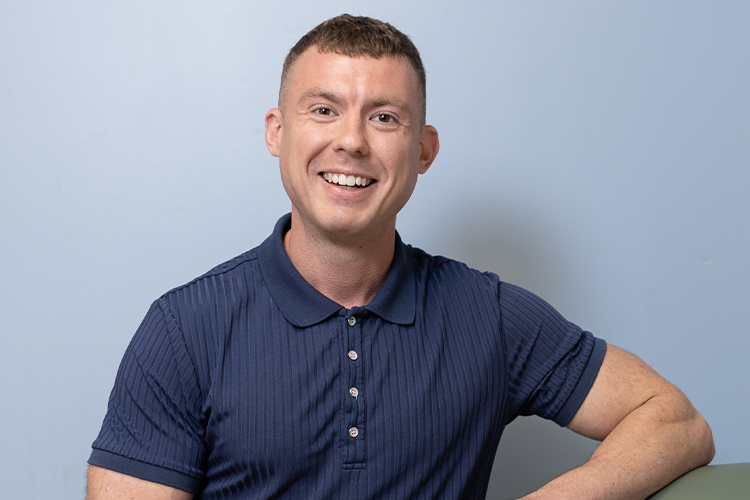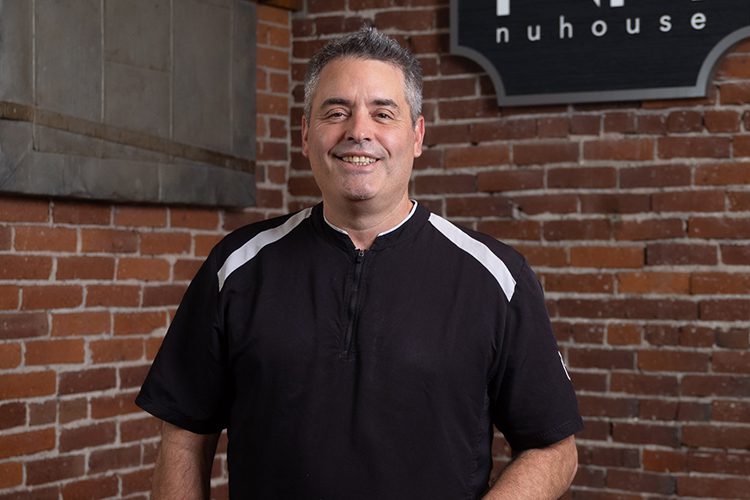
It’s disappointing when you can’t be at the top of your game because of an injury. At NuHouse, athletic recovery specialist Bruce Rambo helps his clients heal from what’s holding them back and sets them up for success with a mind towards preventing future issues.
Tell us a little about NuHouse.
At NuHouse, we seamlessly blend new-age technology with timeless healing practices, offering a sanctuary where you can rediscover the profound feeling of deep rest, true recovery and genuine healing. Since 2019, we have championed an integrative future for wellness, where a coordinated network of practitioners and healers collaboratively bridges the gaps sometimes left by conventional care. We reject the “one size fits all” approach; here at The House, you are empowered to explore, discover and personally define what well-being means for you. Every modality is specifically designed to move you toward a state of wholeness and wellness.
Our dedicated collective—comprising a chiropractor, laser therapists, acupuncturists, massage therapists, estheticians, a dietitian, infrared sauna, salt room, cryo and recovery specialists—works together, supporting your journey every step of the way.
What types of therapies do you personally offer to your clients at NuHouse?
PiezoWave (soundwave therapy), whole-body and localized cryotherapy, emFieldPro high-energy inductive therapy (HEIT) and low-level laser therapy.
What is PiezoWave therapy and how can it help your clients recover from injury?
Also known as shockwave or myofascial acoustic compression therapy, this noninvasive treatment uses focused sound waves to target deep tissue pain and injuries. It stimulates blood flow and cellular regeneration and reduces inflammation, offering an alternative to surgery or extended downtime for conditions like plantar fasciitis, tendinitis and chronic pain. Piezo allows us to work side-by-side with our clients, communicating the whole time to get to the root cause of their pain.
You also offer laser therapy and cryotherapy. How do these different modalities complement each other when treating an injury?
The answer here brings us back to our days in high school biology. You may or may not remember the teacher talking at length about ATP (adenosine triphosphate). Low-level laser therapy, or photobiomodulation, uses light to stimulate mitochondria for better cellular function and quicker recovery from injuries or chronic conditions. It’s about giving your body the fuel it needs to heal itself more effectively. ATP needs oxygen as the final electron acceptor in the electron transport chain. Cryotherapy increases oxygen circulation by triggering the body’s “fight-or-flight” response, constricting blood vessels to send oxygen-rich blood to the core; upon exiting, this nutrient-packed blood rushes back out, delivering more oxygen and nutrients to tissues, aiding recovery, reducing inflammation and boosting cellular function. Simply put, ATP + O2-rich blood = increased healing.
Tell us about HEIT therapy.
HEIT is a cutting-edge, noninvasive treatment that utilizes powerful electromagnetic fields to reach deep within the body. This therapy stimulates cells, tissues and nerves, which in turn promotes healing, reduces inflammation, improves circulation and offers pain relief for a variety of conditions, including chronic pain, nerve issues and post-surgical recovery. At its core, HEIT works by boosting cellular energy. Healthy cells naturally possess a higher membrane charge (energy) than cells that are diseased or aged, which have an impaired function due to a low membrane charge. The electromagnetic fields (EMFs) generated by the emField/HEIT machine penetrate deep into tissues, activating electrochemistry and improving overall cell function. This machine can generate
a magnetic field up to 3 teslas—a strength 600 times greater than
a normal magnet—to stimulate nerve cells, muscles and blood vessels, increasing movement and recovery. Injury recovery is often complicated by the body’s natural response: the brain creates suboptimal compensation patterns in the surrounding muscles to protect and unload the damaged tissues. A critical and challenging phase of recovery is the process of retraining efficient muscle activation patterns to restore optimal movement once the tissues are fully healed. With HEIT we can prevent the disuse atrophy that comes with anything from a mild sprain to post-surgery recovery.
What kinds of things do you recommend to your clients to help them prevent injury?
Here at NuHouse, our goal has always been about wellness, not sickness and injury. Using preventative measures to allow the body to run optimally goes a long way to keep the body from breaking down and ultimately getting injured. Today, many athletes push themselves to the limit. There seems to be no break or downtime in-season or between seasons for multisport athletes. Just make sure you are listening to what your body is saying. It may be telling you it’s time for rest.
What goals do you have for your personal wellness?
Unfortunately, my answer has to start with some advice: “Do as I say, not as I do!” Personal wellness for me has been a struggle for quite some time. Chronic pain from old injuries and some new ones has put a damper on my wellness journey. Sometimes, fear of the unknown can paralyze you physically and mentally. It causes us to make excuses, like “I don’t have the time,” or “Recovery is impossible for me.” I’ve been talking a lot to people about that fear recently. I have about fifteen steps to get to my basement, which has all the weights and equipment I need to get started on my wellness journey. Unfortunately, the fear of what’s at the bottom of those fifteen steps has kept me from getting started. Fortunately, seeing and hearing about people getting better every day—along with coworkers telling me to get on the table for some treatment and a bit of pressure from my family, especially my wife, Jess—has me ready to set some goals and accomplish them.
Describe your morning routine.
My morning routine is pretty simple: an early wake-up (sleep generally escapes me), making sure the kids—Luke, 17, and Jett, 12—are up and ready to get off to school, then logging in to see my schedule for the day. Gotta make a plan! Breakfast is generally not my go-to meal except on the weekend when we can do it as a family. Soon, though, as part of my routine, I will be tackling those basement stairs to the gym that I’ve been avoiding forever.
What about your nighttime routine?
The nighttime routine also revolves around the family. Always a game or practice or both for the kids. My wife and I are often splitting duties—drop off here, pick up there. Then, of course, a way-too-late dinner and some relaxing time when everyone can talk about their day.
How do you relieve stress?
Most people spend way too much time worrying about things that will never even happen, or other things that are uncontrollable. Maybe worse than anything, people worry about things that have happened in the past that are completely unchangeable. For me, sometimes to a fault, it is easy to just not take things too seriously, or make a joke to avoid the stress. But when it’s unavoidable I lean on family and friends. Talk about it, see if it’s even a real thing and if it’s not, let it go!
What is your philosophy on recovery?
It’s simple: “If you stay ready, you don’t have to get ready!”
Published as “Living Well With” in the February 2026 edition of Lehigh Valley Style magazine.