
GMO or Non-GMO: What is the big deal and why are more and more food companies looking to distance themselves from GMO-sourced foods?
Genetic engineering of plants and animals, also known as genetically modified organisms (GMOs), comes with the promise of feeding the world with safe, higher-yielding crops and reduced reliance on herbicides and pesticides. The big question is: Does the technology trump Mother Nature or cause more harm than good?
What Exactly are GMOs?
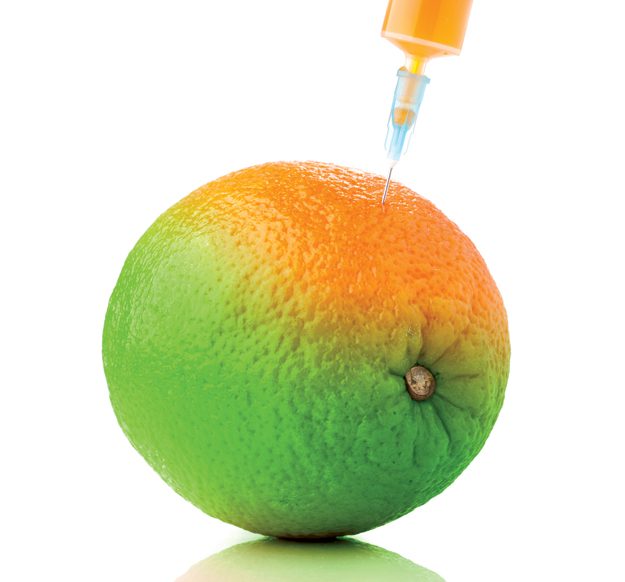
GMOs are plants or animals that have been genetically engineered in order to carry particular nutrient characteristics and to resist herbicides, pesticides and diseases. Using a “gene gun” or bacteria, DNA from another species is injected into the cells of plants and animals, altering their DNA to enable the expression of these traits. While the adaptations might sound positive, they create gene combinations that could not occur naturally or through traditional crossbreeding methods, and they come at a cost.
Are GMOs Safe?
There is currently a great debate regarding the safety of GMOs, and one should expect this controversy to continue. According to the American Academy of Environmental Medicine, “Genetically modified foods pose a serious health risk in the areas of toxicology, allergy and immune function, reproductive health and metabolic, physiologic and genetic health.” They add, “Animal studies indicate serious health risks associated with genetically modified foods, including infertility, immune problems, accelerated aging, faulty insulin regulation, changes in major organs and gastrointestinal system.”
Genetic engineering is not an exact science, and altering DNA can create an unexpected toxic or allergenic effect as well as environmental changes. There have not been adequate long-term studies, and the current lack of labeling of GMO-containing foods makes it nearly impossible to assess the epidemiological impact on public health.
The Environmental Impact
One of the promises of genetic engineering is that it will increase crop yield and lower herbicide and pesticide usage. By inserting particular genes in the plant, it’s enabled it to produce its own pesticides or to be able to withstand sprayings of herbicides and pesticides that would normally kill the plant. In theory, less weeds and less bugs means more product, but these modified herbicide-tolerant plants have actually had a reverse effect, creating “superweeds” that are now resistant to the active ingredient glyphosate found in herbicides. As a result, more glyphosate as well as older, more-toxic herbicides like 2,4-D are being used to combat the weeds.
Charles Benbrook, a research professor at Washington State University, estimates that an additional 527 million pounds of herbicide were used to fight superweeds between 1996 and 2011 than would have been used with non-GMO crops.
The increased use of herbicides infiltrates the groundwater, the environment and the entire food chain. Not only are the plant foods higher in glyphosates, but the animals that eat the feed have higher pesticide exposure.
Glyphosate along with inert ingredients in the herbicide are associated with immune disorders and may cause reproductive problems. Recently the World Health Organization International Agency for Research on Cancer has classified glyphosate as “probably carcinogenic to humans.”
As for net yields, GMOs have shown marginal increased yields over conventional methods. Rodale Institute’s landmark 30-year, side-by-side comparison of organic and chemical agriculture in Kutztown has shown organic farming matches conventional and GMO yields and, importantly, surpasses them in years of drought. It has also shown organic practices to be more energy efficient and enriching to soils, making them more sustainable.
Better Food Supply
Genetic engineering of food is a matter of big business. Three companies currently control over 50 percent of the seed supply for the entire country. These same companies are also makers of the pesticides used on the engineered crops. By engineering seeds, companies are able to patent them as intellectual property, increasing the price and control of what farmers can plant and narrowing the genetic diversity. Narrowing the seed pool also narrows the natural biodiversity and adaptability of various crops. These natural adaptability traits could be lost, which would jeopardize crop sustainability in varying environmental conditions.
Patented crops with licensing fees, herbicide costs and minimal yield improvements make GMOs unsustainable for farmers in developing countries. These factors certainly are in conflict with “feeding the world.”
But I Buy Organic
Even if you are buying organic, your food supply could still be at risk. As GMO acreage increases, there is the increased risk and battle of cross-contamination through pollen and seeds spread by wind, insects, water and machinery from GMO farms. Organic farms can be at risk of losing their crops due to contamination of GMO and, worse yet, be sued by the very company whose GMO seed ruined their crops as patent infringement.
Which Foods to Watch
The list of GMO crops may not be large, but their influence in the food system is far-reaching, especially considering that most animal feed and aquaculture feed are GMOs. Not only is produce impacted, but so are meats, dairy and fish supplies.
Corn, which is 90 percent genetically modified, tops the foods to watch list. While the majority is used in animal feed, the remainder shows up as corn flour, high fructose corn syrup, corn starch, corn meal, masa and corn oil, to name a few. If the tortilla chips in your nachos aren’t organic or if you are drinking a soda sweetened with corn syrup, you are consuming a GMO product.
Soy, canola and cottonseed crops are also over 90 percent GMO and are pervasive in processed foods. Oils or proteins from these crops are in everything from cereals and salad dressings to cookies, energy bars and frozen entrees. Unless certified organic, foods like soy milk, soy protein, soy sauce, textured or hydrolyzed vegetable protein, edamame and tofu are most likely genetically modified foods.
Zucchini, yellow summer squash, Hawaiian-grown papayas and sugar beet crops also make the watch list as they are predominantly genetically engineered. Sugar beets are utilized to make sugar, so if trying to avoid GMO, look for pure “cane” sugar instead.
It is not just plants that are affected. Animals and farmed fish are fed GMO crops, so your chicken, eggs, beef, pork and fish can all be impacted as well.
How Some Food Businesses are Responding
The tide against GMOs in our food is rising and some businesses are responding to the public groundswell.
Chipotle, the national fast-food Mexican chain, has committed to removing all GMO ingredients in its stores. Whole Foods Market, whose regional store is set to open in Macungie in 2016, has committed to requiring full transparency from its suppliers on labeling of all products that contain GMOs by 2018. This unprecedented commitment will also require meat, dairy, egg and seafood suppliers to verify whether animals were fed GMO grains. In addition, Whole Foods is focusing on sourcing non-GMO for all of its private-label value brand and encouraging suppliers to use non-GMO feed in addition to their certified organic line.
Wegmans has taken a more conservative stance as it looks to the FDA to formalize pre-market approval, assuring future GMO products will meet food safety standards. They also look to see a national standard being set for labeling of non-GMO foods, not necessarily labeling foods that do contain GMOs.
A statement from Samantha Krepps, Interim Manager, Public and Community Relations at GIANT Food Stores and MARTIN’S Food Markets, said, “GIANT Food Stores believes that customers should have access to consistent, accurate and relevant labeling information about the food prod-ucts they buy. In the case of non-GMO food products, there should be one national standard for the voluntary labeling that includes clear criteria and definitions.”
Ways to Avoid GMOs
The most assured way to avoid GMOs is buying certified organic foods. Organic foods are not only free from genetically modified ingredients, but also do not use synthetic pesticides.
If organic isn’t available in all areas of your shopping, avoiding the high-risk crops and their food products can be a progressive step. Another way is looking for a “Non-GMO Project Verified” label. This certification is from the only organization that currently provides third-party verification of testing for GMOs in the U.S. and Canada.
Asking the restaurants you frequent about their policy on GMO products can begin to encourage shifts in sourcing.
As awareness and concern over GMO food increases, debate will continue. Safe or not, transparency should exist, as consumers deserve to know what is in their food and make their own choices. Consumers will have the most power through their wallet in impacting the integrity of our food.
By Susan Bianchi, MS Health & Wellness Coach