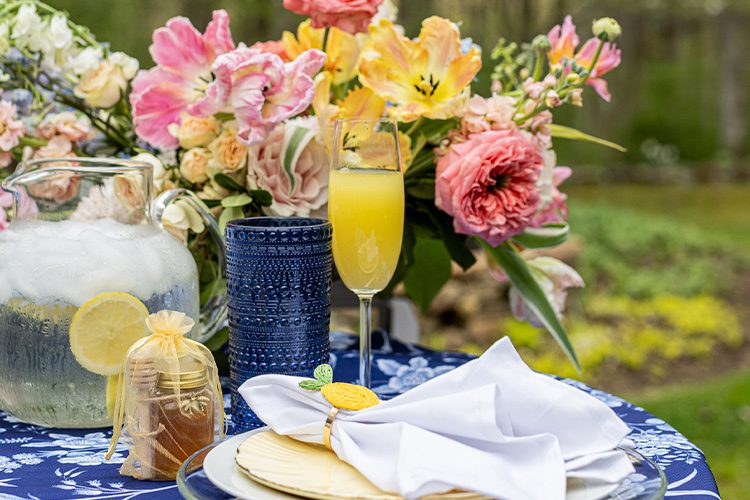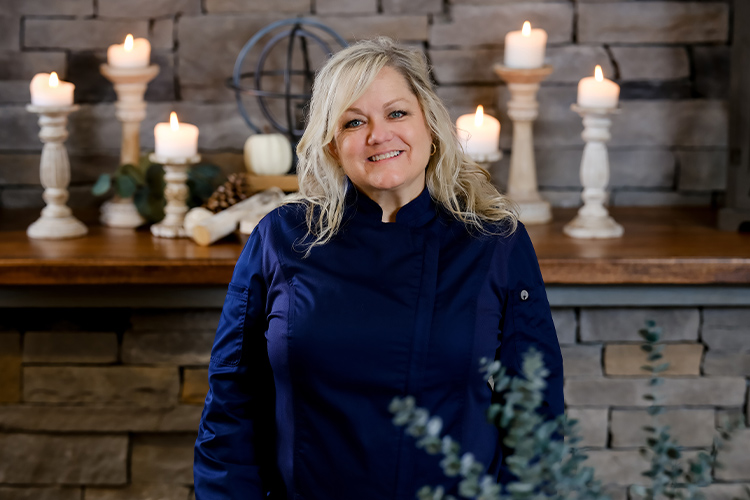
Faces aglow around your stunning tablescape, guests gratefully packed off with abundant leftovers, the ember of tradition safe in your care. Cooking a big holiday feast is rich with rewards, but also no small feat. Here’s a recipe for success from executive chef Cindie Feldman of award-winning catering business 29 Cooks.
Keep It Simple
“That pressure to make sure everyone leaves happy is real,” Feldman says. Even in professional catering, it’s personal. If you’re new to pushing out the boat for the whole extended family (or Friendsgiving), don’t think you need to wow them with extravagance. “People just want to gather,” Feldman reminds us. “Enjoying time over a great, simple meal is all you need to make memories.”
Classic recipes from trusted sources (Feldman likes Ina Garten, Alton Brown and Tyler Florence) are timeless for a reason. It’s often the basics like mashed potatoes and gravy that folks are most looking forward to. “Match your confidence to your experience level,” Feldman says. It will
be enough!
Work Ahead
If there’s a dish you’re intimidated by, a trial run is an entirely fair endeavor. “Cut that recipe down a bit,” Feldman recommends, “and make it ahead of time. Test it out.” Instead of that stress hanging over you, you’ll know exactly why, for example, blind-baking your crust was not optional.
Almost everything for a traditional winter feast can be made ahead of time. Even the turkey. “Undercook it the tiniest bit,” Feldman says, “then slice it into a pan with gravy and heat that the day of.” Mashed potatoes, green bean casserole, all kinds of sides can be made a couple of days ahead and reheated. Add the crispy onions last and you’re good to go.
Dense dishes take longer to heat and will retain their warmth while successive lighter sides are in the oven, so plan accordingly.
Logistics
Scaling up recipes for your number of guests can be a mathematical minefield. Specifically, Feldman warns, when it comes to converting ounces to pounds and vice versa. “If I know my recipe calls for twenty pounds of chicken and I’m doing four ounces of chicken per person, I need to do 20 times 16 and divide by four.” If your mind is reeling, recipe calculators are a great option and readily available online.
Determine a good spread for appetizers with Feldman’s visualization hack: picture the little plates folks will be holding as they mingle and chat. What actually fits there while leaving room for the main event? Feldman cuts an ordinary app allotment (5–6 servings per person) in half when a big dinner like Thanksgiving is anticipated.
As for serving, consider buffet-style. The plentifully laid table is a lovely sight, but by the time dishes are passed around to everyone, your food is cold.

Know Your Crowd
Successful cooking means catering to the tastes of your group. If you have a family of traditional eaters, Feldman says, “Don’t change the stuffing your family has been eating for 100 years.” In that case, an aspirational new item is great as a side. If you’re throwing a funky Friendsgiving, however, go ahead and live on the edge!
For many families, there can never be enough dark meat. Blow their minds by buying extra thighs separately and roasting them in the oven alongside the turkey.
Your guest list also includes those folks who can supplement the menu with their customary carrot soufflé or bring the pies. Enlisting contributions according to ability is all in the game of being a great host.
Buy In
Whether it’s a little something from a catering company or your favorite bakery’s unbeatable options, supplementing your table with stuff you haven’t cooked is not cheating and often a shrewd strategy.
It’s also a great move if you have dietary restrictions to accommodate. “Don’t try to make everything work, and don’t be afraid to bring in something pre-made,” Feldman says, herself celiac. “Most people will be happy if they have a protein and starch. They know the drill.”
Tips & Tricks
Making your menu ahead of time also means storing it, a challenge when your fridge is already full of your usual fare. “Don’t store your stuff in casserole dishes that you can’t stack,” Feldman says. Use aluminum pans, which are compact and stack well, or gallon Ziplocs you can decant into proper dishes day-of.
To make additional room in the fridge, pull out any condiments, juices and odds and ends that clutter things up, and pop them into a cooler of ice for the duration.
Feldman reminds us not to assume a need to buy sage or some other obscure ingredient. Be sure to check the cabinets before shopping—you might have bought it last year. And the year before. “I have enough nutmeg that my grandchildren’s grandchildren won’t be running out,” Feldman says.
Published as “Ask the Expert” in the November 2026 edition of Lehigh Valley Style magazine.