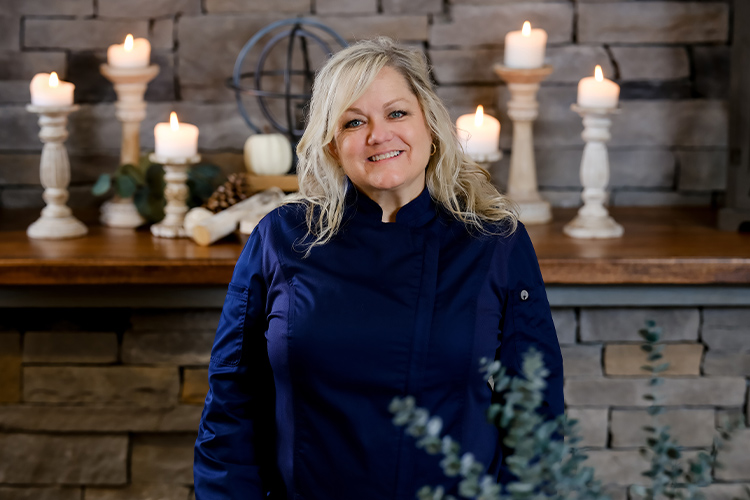
Uninspired by a career in payroll solutions, Matt Check enrolled in his first sommelier class, which started a trajectory that now finds him head winemaker of his own phenomenal yet unfussy establishment, Cellar Beast Winehouse. Here’s what he wants you to know about wine.

How It’s Made
Good wine is for everyone. Check’s team ushers grapes out of Washington State from the vine to the glass, ready to romance the palate of any drinker. “We take what Mother Nature gave us,” Check says. “We take this great fruit and we try to make it happy to become the best version of itself.”
Partnered with a like-minded vineyard in the optimal climate of the Pacific Northwest, Cellar Beast follows the grape where it leads, inviting us to meet
it at its unique conclusion. “The way we approach it is minimal intervention,” Check says. “No synthetic chemicals in the vineyard, nothing inorganic in process, allowing the grape to show its true nature.”
This results in wines that make you think. Whether you’re new to wine or an aficionado, Check’s take on wine can make you reexamine yourself as well as what you’re sipping.
Wine and Oxygen
Wine is a dynamic, organic substance. Just like the winemakers at Cellar Beast shepherd their grapes along, you can continue the cultivation of that wine’s best self by understanding its interaction with the environment after it makes its way to you.
Serve wines at temperatures that enhance their aromas, which is dependent on the variety. Bright whites like Riesling and pinot gris start at 45 degrees, chardonnay a bit warmer, reds like pinot noir around 55–60 degrees and bigger reds like Syrah can be served at 65.
Once a wine is uncorked, it begins to warm and interact with oxygen, releasing its aromatics. The swirling of the glass or opening up a large surface area in a decanter speeds this process along. Eventually, oxidization will carry on fermentation into the realm of the stale and vinegary, but in the course of the evening, the mix of wine and air is part of the dance. Older wines especially benefit from loosening up before drinking.
Glasses and Decanters
“When do I know if I need to decant a wine?” Check poses. “You don’t know. If you’re making dinner, decant, taste along the way. An hour later, it will be a different animal. That will show you the impact of what decanting can do.”
Can we keep an open bottle fresh and fragrant? Recorked on your counter, it has 2-3 days max—a week if you use a compressed air canister designed to displace oxygen. “If you open the bottle, drink the bottle,” Check advises. “It’s not that much wine.” Whatever you do, keep it out of the fridge, where the cold shrinks oxygen molecules and lets them do their dirty work faster.
As for an optimal drinking vessel, he says, “You want a stemmed glass that’s tapered at the top, to trap aromas so you can gather them into your senses.” To avoid warming wine beyond its best temperature, hold your glass by the stem. “Hold it like you’re writing with a pen,” Check says. Imagine drawing small circles, graduating from the table to swirling it in the air.
Buddy Up
Pairings create transcendent experiences, the notes in wine and food collaborating to create new taste sensations. If you’re having lamb lollipops with herbes de Provence, do you want to go with a wine that will accentuate the herbal aromatics or draw out the earthiness? It’s easy to do a little research on tonight’s dinner and find guidance to follow, but experimentation is the best way to explore which combinations taste best to you.
Try what I’ll call the Check Rec—two wines at dinner, one conventional pick and one off the beaten path. “People think steak should be served with a cabernet,” Check says. “Not true. I think the best wine for steak is Syrah.” Cabernet’s notes are green pepper and graphite, while Syrah’s are—meat! Get a bottle of each and compare.
Chardonnay and scallops are a dependable combo, but if you want to splash out, try them with a Garganega from Italy’s Soave region.
Cellar Beast Experience
“We want people to buy our wine,” Check concedes, “but we want to inspire them to be excited to try things. The only way to develop is to try things, taste and experience.”
That’s why, instead of abandoning visitors with a flight of pours, the winemakers at Cellar Beast are constantly in the tasting room telling the story of each wine: what it took to make it, where it came from, why it tastes the way it does. “We pull back the veil,” Check says. Delivering information without talking down, Cellar Beast creates a wine world ready to saturate visitors with infectious passion and encyclopedic knowledge—without the snobbery.
“One thing I try to impress upon people is that if you don’t like this wine or that wine, keep trying. Get out of your comfort zone. Don’t get stuck on that one reliable $12 bottle that you love,” he says (Apothic, he’s looking at you). If you’re not sure what to buy at the store or order at a restaurant, “there are cheat codes,” Check says. “You can scan any bottle with an app called Wine Searcher and backfill all this information.” Find out where it’s from, how it’s ranked by critics, what it might pair with and embrace a lifelong journey of exploration.
Portuguese Side Quest
A tip for one undervalued standout in the Pennsylvania wine market: head to the Portuguese section. “Portuguese wines are really different,” Check says. “There are really cool ones you’ll get as a steal because the American consumer doesn’t really know about it yet.” Look for Quinta da Casaboa, a “damn good variety.”
Published as “Ask the Expert” in the November 2025 edition of Lehigh Valley Style magazine.